


What if you don’t need to speak louder — you simply need to speak sooner?
Take a moment to consider this: you’re sitting around the investment committee table. The discussion is moving quickly — a senior partner is challenging the deal thesis, someone from finance has raised a concern about the numbers, and a colleague has already made a strong recommendation.
You have something to add. In fact, you’ve been turning the issue over in your head for the last twenty minutes. Yet you’re waiting for the right opening — and before you find it, someone else says something close to what you were thinking, and the conversation moves on without you.
You remain quiet.
Sound familiar?
This happens all the time to capable, thoughtful professionals — particularly those who prefer to listen, process information, and formulate their thoughts before speaking.
The problem is that senior leadership environments don’t always reward the person with the most carefully considered thoughts. They often reward the person who can make their thinking visible when it matters.
That’s where executive presence comes in.
Executive presence isn’t about becoming the loudest person in the room. It is a strategic leadership capability—the ability to communicate your judgment, influence decisions, and create confidence in your leadership when the stakes are high.
And for introverted professionals, speaking up isn’t about becoming extroverted.
It is about becoming intentional.
The “I’ll Speak When I Have Something Important to Say” Trap
Throughout my time working with clients in Asia, the trap of ‘waiting to speak until I have something important to say,’ is a comment that I hear often in coaching sessions.
There’s a very logical reason many introverted professionals stay quiet. They don’t want to speak simply to be heard — they want to add value.
They may think:
“I don’t want to interrupt.”
“Someone else already made the point.”
“I need to think about this a little more.”
“I’ll wait until I have something really useful to contribute.”
These instincts often come from a place of professionalism and respect. Yet they can create an unintended problem. If people rarely hear your thinking, they have fewer opportunities to understand how you assess risk, solve problems, and make decisions.
In other words, your expertise may be visible while your leadership judgment remains hidden.
Harvard Business Review has noted that speaking up in meetings can increase workplace visibility, while also cautioning that speaking simply for the sake of speaking isn’t necessarily effective — preparation and having a clear reason for contributing matter.
This distinction matters enormously for investment professionals. A private equity associate may be excellent at due diligence but rarely articulate the investment risks directly to the partner. An asset manager may have deep insight into a sector but let more vocal colleagues frame the discussion. A venture capital professional may spot an emerging market trend early but hesitate to challenge the prevailing investment thesis.
In each case, the issue isn’t capability. It is visible judgment.
The Assumption That Needs to Change
The assumption is: “If my work is good enough, people will know I’m ready.”
Unfortunately, senior leadership decisions don’t work that way. The people deciding whether you’re ready for greater responsibility may not see your day-to-day work — they may see you for thirty minutes in an investment committee, hear you present to a client twice a year, or encounter you during a board discussion, portfolio review, or strategic meeting.
In those moments, they’re not only assessing your technical knowledge. They are also forming a view about how you think, communicate, and respond under pressure.
Allison Shapira, writing in Harvard Business Review after interviewing group heads at a large financial services company, reported hearing a consistent message about leadership readiness – if you are in the room, leaders expect you to contribute rather than wait to be asked.
That doesn’t mean you should talk more. It means that silence has a communication effect too.
The Alternative: Don’t Speak More. Speak With Purpose.
This is the mindset shift:
Stop measuring your contribution by how often you speak. Start measuring it by the value and clarity of what you contribute.
For an introverted professional, this is much more sustainable. You don’t have to compete with the person who thinks out loud, nor should you interrupt or become highly animated — you just need a reliable way to enter the conversation.
Consider this three step process:
Observe → Interpret → Contribute.
First, identify what’s happening. Then decide what it means. Then contribute one useful thought.
This simple framework lets you stay thoughtful without disappearing from the conversation. Here are five ways to put this into practice.
1. Enter the Conversation Early
One of the biggest mistakes introverted professionals make is waiting too long to enter the conversation. Instead, they listen, they analyze, they compare different perspectives, they formulate the perfect response — and by then, the conversation has moved on.
Alternatively, aim to make one meaningful contribution early in the meeting. It could be as simple as:
“There is one assumption in the downside case I’d like us to examine.”
Or:
“Before we move on, I want to flag one issue that could affect the investment thesis.”
You don’t need to deliver your entire analysis — you are simply establishing your voice in the conversation.
Harvard Business Review’s guidance for introverts specifically recommends challenging yourself to become the second or third person to contribute rather than waiting for the perfect moment.
That is a useful executive-presence habit, because early contribution changes how people experience you. You’re no longer the person who sits quietly and speaks only when called upon — you become someone who helps shape the discussion.
2. Prepare Three Talking Points Before High-Stakes Meetings
Speaking spontaneously can be particularly difficult when the room is senior, the subject is complex, and the discussion is moving quickly. Preparation helps — but don’t write a script.
Instead, prepare three things:
One observation: What have I noticed?
One perspective: What do I think it means?
One question or recommendation: What should happen next?
For example, before an investment committee:
Observation: Customer concentration has increased.
Perspective: That makes the downside case more vulnerable than the original model suggests.
Recommendation: Stress-test the valuation before proceeding.
If the conversation moves in that direction, you already know what you want to say. This isn’t rehearsing a performance — it is preparing your thinking, not ‘winging it’ like some executives think they can do and make an impact.
And preparation often makes confidence more accessible because you’re not scrambling to construct your message while everyone is looking at you.
3. Use Questions to Find Your Voice
You don’t always need to make a bold statement — a well-placed question can be an excellent way to contribute. For example:
“What assumption are we most dependent on here?”
“What would have to be true for this thesis to work?”
“What risk could materially change the outcome?”
“Are we solving the right problem?”
These questions can shift the conversation without requiring you to dominate it. They also demonstrate something highly valuable at senior levels – judgment.
The quality of your questions can reveal the quality of your thinking. This is particularly powerful for investment professionals, because strong investment decisions depend not only on knowing the data, but on knowing which questions the data should lead you to ask.
4. Don’t Wait Until Your Thought Is Perfect
This is perhaps the biggest mindset shift for thoughtful professionals. Your contribution doesn’t have to be perfectly formed before you say it. You can make your thinking visible while it is still developing.
Here’s what that can sound like:
“I’m not fully convinced yet, but there’s one part of this I think we should examine.”
“I may be missing something, but the assumption I’m struggling with is…”
“There are two ways I see this. My initial view is…”
This language lets you contribute without pretending to have absolute certainty — and that can actually strengthen your credibility.
Senior leadership is not about having an answer to everything. It is about demonstrating you can think clearly in uncertainty.
5. Make Your Voice Count After the Meeting Too
Speaking up doesn’t stop when the meeting ends. If you had an important insight but didn’t get the opportunity to raise it, you can still make your thinking visible — send a concise follow-up.
For example:
“One thought following today’s discussion: I think the customer concentration issue deserves more attention because it could materially affect the downside case. I’d suggest we test this before the next IC.”
That’s it — no long email, no self-promotion, just a clear observation and a recommendation.
Visibility is not always about performing in the room. It is also about making sure valuable thinking doesn’t disappear when the meeting ends.
Why Speaking Up Is Part of Executive Presence
Speaking up is often dismissed as a “soft skill.” At senior levels, it is anything but soft — your ability to communicate your thinking affects how others experience your leadership.
Research on executive presence has traditionally emphasized gravitas, communication skills, and appearance, while more recent thinking recognizes that expectations around executive presence are evolving.
For an investment professional, executive presence may look like:
• raising a risk before someone else identifies it
• challenging an assumption respectfully
• making a clear recommendation
• staying composed when challenged
• asking a question that changes the direction of a discussion
• explaining complex analysis in a way senior stakeholders can act on
None of those behaviors require you to be extroverted.
The objective, therefore, is not to overcome introversion. It is to use your natural strengths while developing the communication behaviors that senior leadership requires.
A Simple “Speak Up” Blueprint
Before your next important meeting, ask yourself:
1. What do I want to contribute?
Identify one insight, risk, question or recommendation.
2. When will I enter the conversation?
Don’t wait indefinitely. Look for an early opening.
3. Can I say it in one or two sentences?
If you cannot explain your point simply, simplify your thinking first.
4. What question could move the discussion forward?
You don’t always need an answer. Sometimes the right question demonstrates leadership.
5. What do I want people to remember?
Your objective is not to be memorable because you spoke regularly. It is to be remembered for the quality of your judgment.
Stop Competing with the Loudest Voice
You don’t need to win the volume contest, become the fastest thinker in the room, or change your personality.
But if you consistently wait until everyone else has spoken, you may unintentionally make your leadership harder to see.
The goal is simple.
Don’t speak more. Speak with purpose.
Before your next investment committee, client meeting, or leadership discussion, prepare one point of view and one question. Then make your contribution earlier than you normally would.
Afterwards, ask yourself:
“Did the room get to hear how I think?”
If the answer is yes, you’re not simply speaking up — you’re building executive presence.
And if you want to develop this capability further, practice in progressively higher-stakes situations: one-to-one conversations, small team meetings, senior leadership discussions, then board or investment committee presentations.
Your voice does not have to be the loudest in the room. It simply needs to be clear enough, confident enough and purposeful enough to be heard.
Frequently Asked Questions
Do I need to become more extroverted to build executive presence as an introvert?
No. None of the behaviors that build executive presence — raising a risk early, asking a sharp question, staying composed under challenge — require you to be extroverted.
When should I speak up in a meeting if I’m naturally more reserved?
Aim to be the second or third person to contribute rather than waiting for the perfect moment. Early contribution changes how people experience you — you shift from someone who speaks only when called upon to someone who helps shape the discussion.
What should I do if I don’t have a fully formed opinion yet?
Say so. A phrase like “I’m not fully convinced yet, but there’s one part of this I think we should examine” lets you contribute while your thinking is still developing — and it can actually strengthen your credibility rather than undermine it.
What if the meeting ends and I never got to raise my point?
Send a short, focused follow-up — one observation and one recommendation, nothing more. Visibility isn’t only about the room; it’s about making sure valuable thinking doesn’t disappear once the meeting is over.
Is it possible to build executive presence without changing my personality?
Yes — and that’s really the whole point. In my coaching work, I’m not out to turn quiet, analytical professionals into extroverts. I’m helping them make their existing judgment visible through a handful of specific, learnable behaviors.
How can I tell if my quietness in meetings is actually holding my career back?
A useful test: after an important meeting, ask yourself honestly whether the room got to hear how you think. If people are consistently surprised by the quality of your insight once they finally hear it, that’s usually a sign your visibility — not your capability — is the gap to close.
About the Author
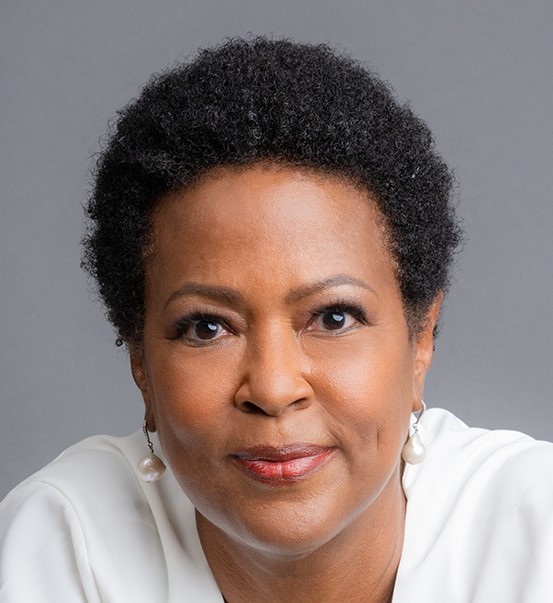
Pamela Wigglesworth, CSP, is an international presentation performance consultant, speaker, author and founder of Experiential Hands-on Learning. She is the creator of the 5-step Persuasive Presenter framework used in her coaching work and online course.
Over the past 15+ years she has coached CEO’s, CFO’s, senior executives, and investment professionals to develop their executive presence, develop presentations that are clear, concise, and compelling and deliver their thoughts and ideas with style, confidence, and authority.
Led by Pamela Wigglesworth
Pamela Wigglesworth, CSP, is an international presentation performance consultant, speaker, author and founder of Experiential Hands-on Learning. She is the creator of the signature 5-step Persuasive Presenter framework used in her coaching work.
Over the past 15+ years, she has coached CEO’s, CFO’s, senior executives, and investment professionals to develop their executive presence, craft presentations that are clear, concise, and compelling, and deliver their thoughts and ideas with style, confidence, and authority.