

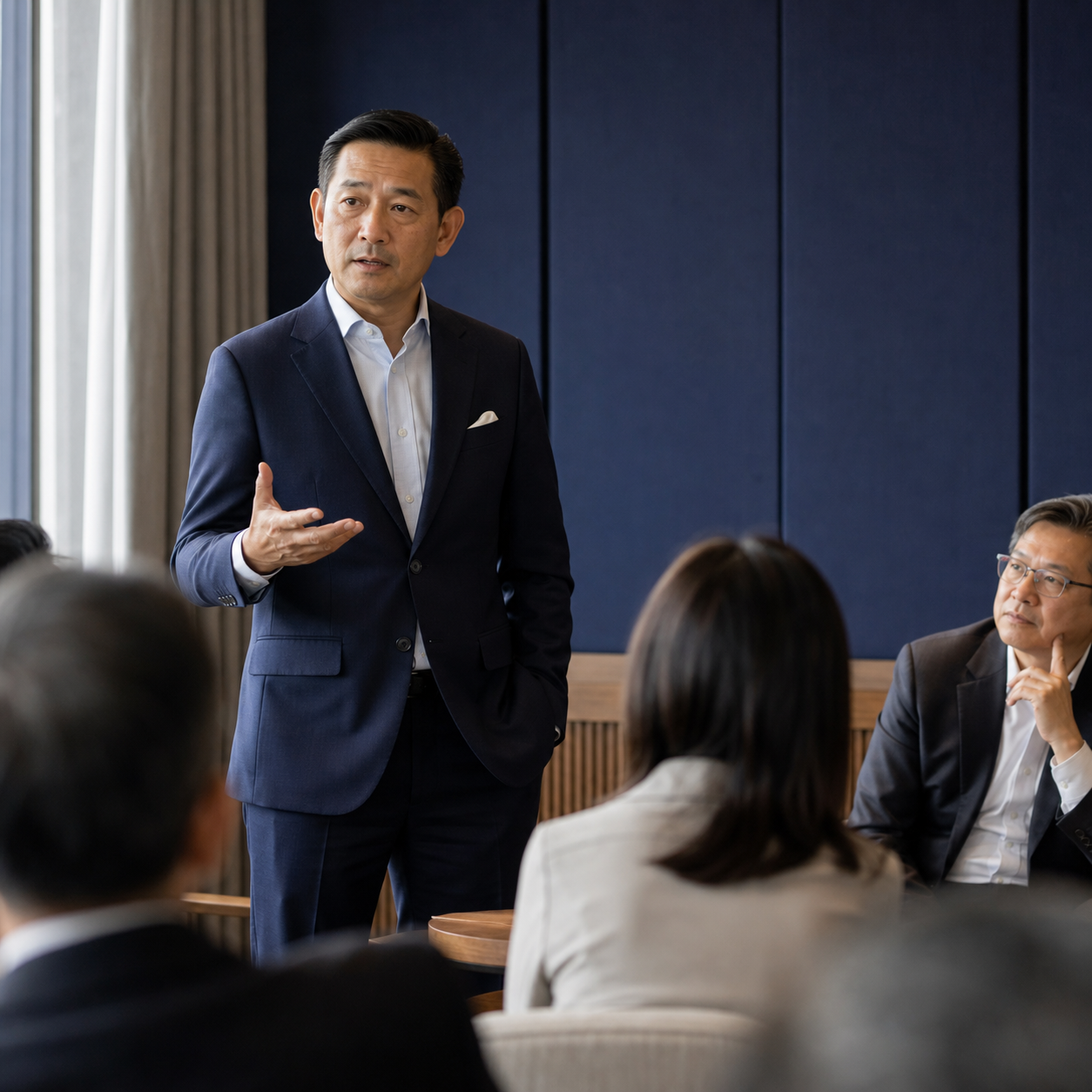
Do you really need to become more charismatic to develop executive presence?
If you’re a senior executive, chances are you’ve heard some version of this advice: “Be more confident.” “Command the room.” “Speak with authority.” “Project more presence.”
The problem is that this advice can leave even highly capable executives wondering what they’re actually supposed to do differently.
For investment professionals, I find the challenge is even more frustrating.
You’ve spent years developing technical expertise, commercial judgment and industry knowledge. You know your numbers, you understand the risks, and you’ve built real relationships with clients, investment committees, boards and senior stakeholders.
And yet, in a high-stakes meeting — presenting an investment recommendation or speaking to the executive committee — you may still feel that your expertise isn’t carrying the weight it should. You might speak too quickly, over-explain your recommendation, hedge your point of view, get defensive when challenged, or wait for the perfect moment to speak, only to find the conversation has already moved on.
So, do you need to become a different kind of person?
No.
You need to make your leadership capability easier for other people to experience.
The Executive Presence Mistake Many Senior Executives Make
A common assumption is that executive presence is primarily about how you appear: the right posture, the right voice, the right clothes, the right level of confidence.
Those things can influence perception, but they’re not the foundation.
Executive presence is far more useful when you view it as a strategic leadership capability — the combination of how you think, communicate, respond under pressure and influence others, particularly when the situation is ambiguous, important or uncomfortable.
This matters because senior leadership is increasingly a team activity rather than an individual performance.
McKinsey’s recent research into top-team performance found that, among CEOs with three or more years in the role, innovative thinking and communication had the strongest correlations with top-team performance, both at 0.81. Psychological safety and purpose followed at 0.77. McKinsey notes that these are correlations, not evidence of causation.
That finding is useful for thinking about executive presence. The goal isn’t simply to appear impressive — it’s to become someone who helps the leadership team think, decide and act more effectively.
The One Shift That Changes Executive Presence
If you remember only one idea from this article, make it this one:
Stop trying to look like a senior executive. Start communicating and behaving in ways that give other people confidence in your leadership judgment.
That shift changes what you actually work on.
Instead of asking, “How can I sound more authoritative?” you ask, “How can I make my thinking clearer?”
Instead of “How can I appear more confident?” you ask, “How can I stay composed when challenged?”
Instead of “How do I make people notice me?” you ask, “How can I make a useful contribution to the decision?”
And instead of “How do I prove that I know the answer?” you ask, “How can I help the room reach a better answer?”
That’s a much more practical way to develop executive presence.
Five Behaviors That Make Executive Presence Visible
1. Lead With Your Point of View
Highly knowledgeable executives often make the same mistake: they give the audience the entire journey before revealing where they’ve actually arrived.
For example, an investment professional might spend ten minutes explaining market conditions, historical performance, valuation assumptions and competitive dynamics before finally saying:
“So, my recommendation is that we proceed.”
The problem isn’t the analysis. The problem is that the executive committee has had to work too hard to find the conclusion.
Senior audiences usually need the judgment first. Here’s how that might sound instead:
“My recommendation is that we proceed to the next stage. The opportunity is attractive for two reasons, but there is one valuation risk I want the committee to pressure-test.”
Now the room knows where you stand. You haven’t removed the analysis — you’ve simply put your judgment where it belongs, up front.
Before your next important meeting, it’s worth completing three sentences:
My recommendation is…
The two reasons that matter most are…
The biggest risk is…
If you can’t answer those clearly, you’re probably not ready to present the material yet.
Why it strengthens executive presence
A clear point of view demonstrates judgment. And judgment is one of the true currencies of senior leadership.
2. Make Complexity Easier to Understand
This one skill set is key for all presentations. Senior executives don’t need you to demonstrate how much information you’ve absorbed. They need you to make complex ideas and concepts easier to navigate.
This is particularly important in private equity, venture capital, asset management, wealth management, banking and insurance, where decisions often involve large amounts of financial, market, regulatory and client information.
Consider these differences:
“There are a number of factors that could potentially influence the outcome, including changes in the macro environment, competitive dynamics and possible shifts in customer behavior.”
Versus this:
“Three factors could change the outcome. The biggest is customer retention.”
The second version isn’t less intelligent. It is more useful. Executive presence becomes visible when you can take something complicated and identify what actually matters.
One structure I give my clients constantly is the Headline → Evidence → Implication approach.
Headline: What is happening?
Evidence: What proves it?
Implication: Why does it matter?
Then stop. If the executive committee wants more detail, they’ll ask for it.
Why it strengthens executive presence
Clarity communicates control. When you can make complexity understandable without oversimplifying it, people experience you as someone who can operate at a strategic level.
3. Stay Composed When Someone Challenges You
You probably read point three and thought, Yeah right! Easier said than done. This may be the most revealing test of executive presence. It’s easy to appear confident when everyone agrees — the real test comes when a CEO challenges your recommendation, the CFO questions your assumptions, or another investment professional chimes in with, “I don’t agree with that conclusion.”
A technically strong executive can instinctively go into defense mode–speaking faster, introducing more evidence, referring to another slide, explaining why their analysis is correct. But the more they defend, the more tension they tend to create.
Instead of going into defense mode, a much stronger response sounds something like:
“That’s a fair challenge. The conclusion depends on our assumption about pricing. Let me explain why we believe that assumption is reasonable — and where the downside would appear if it changed.”
You haven’t backed down. You’ve demonstrated composure.
Here is a useful structure you can use: Pause → Acknowledge → Respond: pause before answering, acknowledge the question or concern, then respond to what was actually asked.
And if you genuinely don’t know the answer? Say so.
“I don’t have enough information to answer that confidently. I don’t want to speculate.”
“Allow me to dive into this, and I will come back to you within the next 24-48 hours.”
That can be far more credible than improvising an answer.
Why it strengthens executive presence
People don’t expect senior executives to know everything. They do expect them to demonstrate sound judgment when they don’t.
4. Speak to the Business, Not Just Your Function
Another executive-presence trap is staying too closely attached to your own area of expertise. An investment leader naturally thinks about returns, a risk leader thinks about exposure, a finance leader thinks about capital, a client leader thinks about relationships — but the executive committee has to think about all of them at once.
Say you’re recommending a new investment. A functional perspective might sound like:
“The projected IRR is 19%.”
An enterprise perspective might sound like:
“The projected return is attractive, but the bigger question is whether this investment fits our portfolio concentration, liquidity requirements and capital-deployment priorities.”
The second statement demonstrates broader leadership thinking.
Before you make a recommendation, it helps to ask yourself what it means for growth, for risk, for clients, for people and for your strategic priorities. You don’t need to raise all five in the meeting — but you should understand the trade-offs between them.
Why it strengthens executive presence
Enterprise thinking signals that you’re ready for responsibility beyond your current role. You’re no longer simply representing a function — you’re helping lead the business.
5. Make Your Leadership Predictable
Executive presence isn’t created during one great presentation. It develops through repeated experiences. You say you’ll follow up, and you follow up. You spot a risk, and you raise it early. You disagree, but you do it constructively. You make a commitment, and you deliver on it. You make a mistake, and you own it.
Over time, people build a mental model of you. “I know what I can expect from this person.” That predictability builds trust, and trust is an essential component of leadership credibility.
The 2026 Edelman Trust Barometer CEO research found that trust in one’s own CEO varies significantly by organizational level. 79% of executives surveyed said they trust their CEO to do what is right, compared with 56% among associates.
The broader lesson isn’t that every executive needs to behave identically — it’s that leadership credibility is experienced differently depending on where someone sits in an organization. Consistency, therefore, matters.
Here’s a simple exercise you can use to assess your behavior during a meeting. Choose three words you want senior colleagues to associate with your leadership — for example, clear, composed, reliable — then ask yourself after every important meeting, “Did my behavior reinforce those three qualities?”
Why it strengthens executive presence
Your reputation is built from repeated behaviors. The goal isn’t to create an impressive moment — it’s to create a consistent leadership experience.
What Executive Presence Looks Like in the Real World
Imagine two senior investment professionals presenting the same opportunity. Both have extensive technical know-how, both have analyzed the market, and both understand the risks.
The first spends 15 minutes explaining the research. When challenged, they defend each assumption. When asked for a recommendation, they say:
“There are a number of considerations we need to take into account.”
The second begins:
“I recommend we proceed to diligence. The return profile is attractive, and the market opportunity is compelling. My biggest concern is valuation, and that’s the issue I’d like the committee to pressure-test today.”
Then someone challenges the recommendation. They pause, they listen, they respond, they acknowledge the uncertainty — and they let go of the need to win every point.
Which executive demonstrates stronger presence? It isn’t necessarily the person with better technical knowledge. It’s the person whose behavior creates confidence in their judgment.
Executive Presence Is Not About Becoming Someone Else
This is important, so let me say it plainly.
Senior executives sometimes approach executive presence as if they need to become more extroverted, charismatic, or forceful. You don’t. A quiet executive can have extraordinary presence. So can a highly analytical one. So can someone who’s naturally reserved.
Working with clients from Asian cultures, I hear time and time again that they feel they need to be more assertive and louder than their Western counterparts in Europe, the US, or Australia, and that’s not the case.
The question isn’t “What personality do I need to project?” It’s “What leadership behaviors do I need to make more visible?”
For one executive, that might mean speaking earlier in meetings. For another, it might mean speaking less and making each contribution more strategic. For another, it might mean becoming more comfortable with disagreement. And for another, it might mean replacing detailed explanations with concise recommendations.
The development path is specific for every individual. The underlying capability is the same. Can people trust your judgment, understand your thinking, and remain confident in your leadership when the stakes are high?
Your Executive Presence Check
Before your next high-stakes meeting, ask yourself five questions:
1. Point of view:
What do I actually recommend?
2. Clarity:
Can I explain the issue in one sentence?
3. Composure:
What question am I most likely to be challenged on?
4. Enterprise thinking:
What broader business implication should I consider?
5. Consistency:
What leadership quality do I want people to experience from me?
Then choose one behavior to deliberately practice. Don’t attempt to transform everything at once.
Executive presence develops through small, observable changes repeated over time.
The Real Goal of Executive Presence
The goal isn’t to walk into a room and make everyone think, “What an impressive executive.” That’s image.
The more valuable outcome is for people to leave the room thinking: “I trust their judgment.” “They made that complicated issue easier to understand.” “They stayed calm when challenged.” “They see the bigger picture.” “I want them involved in this decision.”
That is strategic leadership capability. And it is why executive presence should not be treated as a superficial exercise in personal image. It is part of how senior leaders communicate judgment, create confidence, and influence decisions.
Start With One Conversation
You don’t need a new personality to develop executive presence. You need greater awareness of the behaviors that shape how your leadership is experienced.
For your next important meeting, pick one: lead with your recommendation, simplify your message, pause before responding, raise the enterprise implication, or follow through consistently.
Then ask someone you trust:
“When I communicate in senior meetings, what is one behavior that would make my leadership presence stronger?”
Listen carefully. Don’t explain why you did what you did. Use the feedback. Practice. Repeat.
Because executive presence isn’t something you suddenly acquire when you reach the C-suite. It is something you build by consistently demonstrating the qualities that make people confident placing greater responsibility in your hands.
And when your expertise is matched by clarity, composure, judgment and influence, your presence starts doing something far more valuable than making you look senior.
It helps you lead.
For support with a high-stakes board, investor, or senior leadership presentation, leadership communication, or executive presence in person and online, reach out and book a 20-minute strategy session to discuss your executive presence gaps.
FAQS
What is executive presence, really?
It isn’t about charisma or how you look in the room. Executive presence is a strategic leadership capability — the combination of how you think, communicate, respond under pressure and influence others, especially when a situation is ambiguous, high-stakes or uncomfortable.
Do I need to become more extroverted or charismatic to build executive presence?
No. Quiet, analytical and naturally reserved executives can all have extraordinary presence. The real question isn’t what personality you need to project — it’s which leadership behaviors you need to make more visible.
What’s the fastest way to sound more senior in a meeting?
Lead with your point of view instead of building up to it. Senior audiences want your judgment first — the recommendation, the reasons, and the risk — not the full analytical journey that got you there.
How should I respond when someone challenges my recommendation?
Use pause, acknowledge, respond. Pause before answering, acknowledge the concern, and respond to what was actually asked rather than going straight into defense mode. If you genuinely don’t know the answer, say so — it’s more credible than improvising.
Can executive presence actually be coached, or are people just born with it?
It can absolutely be coached — that’s the work I do every day with investment professionals across Asia. Presence is a set of observable behaviors, not a fixed personality trait, which means it can be broken down, practiced, and strengthened like any other leadership skill.
How long does it typically take to develop stronger executive presence?
Most clients notice a real shift within a few months of focused practice, because the goal isn’t to overhaul your personality — it’s to change specific, repeatable behaviors like leading with your recommendation or staying composed under challenge. Small changes, applied consistently, compound faster than people expect.
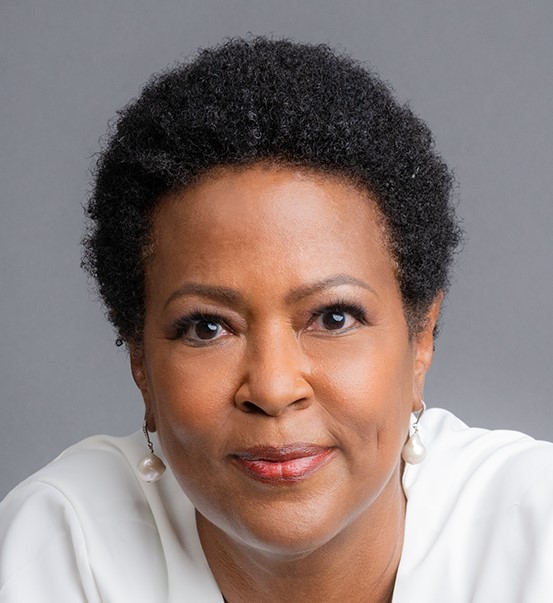
Led by Pamela Wigglesworth
Pamela Wigglesworth, CSP, is an international presentation performance consultant, speaker, author and founder of Experiential Hands-on Learning. She is the creator of the signature 5-step Persuasive Presenter framework used in her coaching work.
Over the past 15+ years, she has coached CEO’s, CFO’s, senior executives, and investment professionals to develop their executive presence, craft presentations that are clear, concise, and compelling, and deliver their thoughts and ideas with style, confidence, and authority.