


When considering executive presence, one might ask, ‘Is there a difference in executive presence between men and women?’
Research shows that the inherent capabilities of men and women are fundamentally the same. Studies reveal no statistically significant differences in the actual capacity of men and women to engage, inspire, align teams, and drive strategic results.
However, how executive presence is perceived, evaluated, and experienced differs significantly due to systemic expectations, gender biases, and the environments leaders operate within.
That then begs the question, ‘How do women leaders demonstrate executive presence and own the room without losing their voice?’
Executive presence for women leaders is not about becoming louder, tougher, or more like someone else. It is the ability to communicate a clear point of view, make sound judgment visible, and lead with composure in the moments that matter. That may mean explaining a forecast, capital decision, or strategic recommendation to a board, investor, or senior leadership team with precision and calm. Develop it through preparation, purposeful delivery, strategic visibility and feedback that respects your voice.
“Executive presence” is often described as a quality people recognize but struggle to define. That can make it feel subjective, or worse, like a code women must crack by copying an outdated image of leadership.
That is not the goal women are aiming for. Leadership is not a performance of someone else’s skillset. The most sustainable presence comes from communicating with clarity and authority while remaining recognizably yourself.
For women leaders, the challenge can be compounded by uneven expectations about how confidence, warmth, decisiveness and ambition should look. This can be especially acute in a finance, investment or board setting where every assumption and recommendation may be tested. The answer is not to contort yourself to meet every expectation. It is to make your thinking, contribution, and leadership intent easier to understand.
As an Asia-based communication consultant and presentation coach with more than 15 years of experience, I have observed that presence is built through repeatable moments: how you enter a meeting, frame a recommendation, respond to pressure, invite a decision, and follow through.
These are skills that can be practiced.
What executive presence really is
Executive presence is the confidence others have in your ability to contribute, decide, and lead. It is communicated through more than appearance or speaking volume. In practice, it rests on three connected areas:
1. Clarity of thought. You can explain the issue, your recommendation, and the decision needed without burying the room in detail. For a board or investor audience, you clearly distinguish between facts, forecast assumptions, downside, and the decision sought.
2. Composed delivery. Your voice, pace, posture, and response to challenges support your message rather than distract from it.
3. Visible leadership. Colleagues understand where you stand on issues, what you value, and what you will do next.
Let’s be clear, none of these require you to be the most extroverted person in the room. A calm, succinct leader can have considerable presence. So can someone who asks sharp questions, synthesizes competing views, and makes a difficult decision understandable.
Do not confuse authenticity with under-preparation
“Be authentic” is good advice only when it is paired with preparation. Anyone who has worked with me knows that I’m a huge advocate of preparation.
Going into a high-stakes meeting without a clear point of view is not authenticity; it is literally leaving your contribution open to being defined by the loudest voice in the room.
Before an important presentation, meeting, pitch, or panel session, write down three things:
- The one sentence, that sound bite, you want people to remember.
- The decision, agreement, or action you need from the room.
- The two concerns—such as an assumption, risk or forecast variance—most likely to slow that decision down.
This allows you to speak in your natural style while still giving the audience a reliable structure. It also prevents a familiar problem of having to explain the whole background before stating your recommendation.
Here’s an opening for you to consider. “My recommendation is that we [action], because [reason]. Today I need agreement on [decision], and I will cover the two risks we need to manage.” It is direct without being abrasive.
Make your contribution easier to hear
In a busy meeting, good ideas can be lost because they arrive without a clear headline. Give your message a shape.
Lead with the point
State your conclusion first, then explain. Instead of, “I have been looking at several options, and there are a few things we should consider…”, say, “I recommend option B. It best protects the timeline and gives us a practical contingency.”
The second version does not claim certainty you do not have. It makes your judgement visible and opens a useful discussion.
Use concise signposts
Signposts help others follow you. In a business presentation, a signpost is a verbal or visual cue that guides your audience through your structure, showing them where you are, where you've been, and what topic is coming next.
Key Types of Presentation Signposts
Introductory: Outlining the roadmap at the beginning.
Example: "Today, I will cover three main points."
Sequencing: Moving numerically or chronologically through your agenda.
Example: "First, let us look at sales; second, we examine costs."
Transitional: Shifting smoothly from one idea to the next.
Example: "Moving on to our next topic…" or "However, this brings us to a potential delay."
Summarizing / Concluding: Wrapping up a section or the entire talk.
Example: "In short," or "To recap our progress…"
This is particularly helpful when you have technical expertise. The audience does not need every detail to understand why your recommendation is sound.
Replace unnecessary qualifiers with evidence
Words such as “just”, “maybe”, “I think”, or “I could be wrong but” can weaken a point before the audience has heard it. They are not always wrong, yet sometimes a qualifier is exactly what intellectual honesty requires. The question is whether it accurately reflects your level of certainty.
When you have evidence, say what it shows. When you have a judgement, own it. When you need more information, say that clearly. Precision is more credible than either overconfidence or habitual self-discounting.
Handle interruptions and pushbacks without shrinking or escalating
Interruptions happen for many reasons, such as urgency, enthusiasm, disagreement, habit, or even power dynamics. You do not need a universal response. You need a few phrases that let you choose your next move.
When you want to finish your point
Use, “I will come to that. Let me complete the recommendation first.” Or “There is one final piece of context that will answer that question.”
Deliver the phrase evenly, then continue. You are managing the meeting, not asking permission to contribute.
When a useful challenge deserves space
Consider, “That is an important concern. My current view is [answer]. Let’s test whether the evidence changes it.”
This keeps you open to better information while showing that you have a considered position.
When you are interrupted repeatedly
Name the process, not the person: “I want to make sure we hear the full recommendation before we debate it.” If the pattern continues, a meeting chair or sponsor may need to support a more balanced discussion. Executive presence is not the role of one person; respectful meeting norms matter too.
Build visibility with purpose
Visibility is not self-promotion for its own sake. It is making sure that the people who need your expertise can see the value and direction of your work.
Choose opportunities that align with your leadership goals. Consider leading a key agenda item, presenting a board or investor decision paper, sponsoring a cross-functional initiative, or representing your team with a client. Before accepting, give thought to the contribution you want to be associated with your name.
Afterward, make the next step visible. A short note that captures a decision, owners, and timing is often more powerful than a long recap. It shows that you can move work forward.
Find feedback from people who see you in the situations you want to master. Ask specific questions such as, “Was my recommendation clear in the first minute?” “Where did I lose the room?” “Did I respond to challenge directly?” Specific feedback produces specific practice.
Keep your voice while adapting to the room
Adaptability is a leadership strength. It is not inauthentic to adjust your level of detail for a board, investor, client, technical team, or town hall. The intention and core message can stay consistent while the examples, evidence, and pace change. In a finance or investor setting, use the organization’s approved numbers and be clear about what is reported, what is assumed, and what decision you are seeking.
In multicultural workplaces across Asia, pay attention to how the room makes their decisions. Some audiences will value direct debate while others will expect pre-meeting consultation and measured language. Prepare for both. Seek input before the meeting where appropriate, then be clear about your position when the decision is on the table.
Your voice is not only your tone. It is the judgement, values and perspective you bring. Do not remove those in the name of “sounding important.”
A practical executive-presence checklist
Use this before your next leadership moment:
- [ ] I can state my recommendation in one sentence.
- [ ] I know the decision I need, who owns it, and the finance or investor assumptions most likely to be tested.
- [ ] I have prepared for the most likely challenge or interruption.
- [ ] My opening gives the point before the background.
- [ ] My pace, volume and posture help the room follow me.
- [ ] I have a phrase ready to protect my speaking space respectfully.
- [ ] I will make the agreed next step and ownership visible after the meeting.
- [ ] I have identified one specific behavior to practice and one person who can give useful feedback.
Executive presence grows through practice, not imitation
You do not need to wait for a promotion, a perfect opportunity, or someone else’s permission to practice leadership communication. Start with the next meeting. Clarify your point. Make your reasoning visible. Speak at a pace the room can absorb. Respond to a question without rushing to defend yourself. Close with a clear next step.
Over time, those practices build trust. They help others experience you as a leader who is clear, thoughtful, and steady—without losing the voice that makes your leadership valuable.
If you have a real executive committee contribution, a boardroom presentation or a high-stakes leadership conversation coming up, don’t leave it to chance. Reach out, and let’s work together through Executive Presence & Presentation Coaching to make sure you walk into that room ready; clear, credible and in command.
Book a 20-minute strategy session to learn more.
FAQs
What is executive presence for women leaders?
It is the ability to make your judgement, contribution, and leadership intent clear through confident, composed, and authentic communication. It is not a requirement to copy a stereotypical leadership style.
Do women leaders need to be more assertive to have executive presence?
Executive presence is not about being forceful. It is about being clear about your point of view, responding thoughtfully to challenges, and helping a group move toward a decision.
How can I speak with more authority in meetings?
Lead with your conclusion, use concise signposts, remove qualifiers that do not reflect your real uncertainty, and support your point with relevant evidence or reasoning.
How should I respond when I am interrupted?
Use a calm phrase such as, “Let me complete the recommendation first,” then continue. If interruptions are repeated, name the need for a balanced process and ask the meeting chair to support it.
Can introverted leaders have executive presence?
Yes. Executive presence is not the same as extroversion. A leader can be measured, analytical and quiet while still being clear, prepared, responsive and influential.
How do I develop executive presence without losing authenticity?
Practice observable communication skills—clear openings, concise recommendations, purposeful delivery and respectful boundaries—while retaining your own values, judgement and natural style.
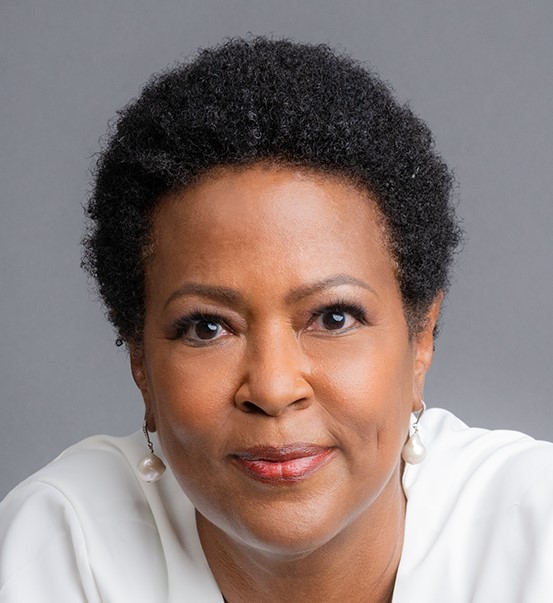
Led by Pamela Wigglesworth
Pamela Wigglesworth, CSP, is an international presentation performance consultant, speaker, author and founder of Experiential Hands-on Learning. She is the creator of the signature 5-step Persuasive Presenter framework used in her coaching work.
Over the past 15+ years, she has coached CEO’s, CFO’s, senior executives, and investment professionals to develop their executive presence, craft presentations that are clear, concise, and compelling, and deliver their thoughts and ideas with style, confidence, and authority.